How To Identify Alligator Skulls


Alligator Skull Identification: How to Recognize and Identify an Alligator Skull
Alligator skulls are among the most distinctive reptile skulls found in North America. Whether you’re a collector, taxidermist, hunter, educator, or wildlife enthusiast, learning how to identify an alligator skull can help you better understand these fascinating apex predators. From their powerful jaws to their unique tooth patterns, alligator skulls possess several characteristics that make them easy to distinguish from other reptiles.
What Makes an Alligator Skull Unique?
The skull of an American alligator (Alligator mississippiensis) is specifically adapted for crushing prey such as turtles, fish, birds, and mammals. Unlike crocodiles, which generally have narrower snouts, alligators have broad, rounded snouts that provide tremendous bite force.
Several key features help identify an alligator skull:
- Broad U-shaped snout
- Heavy jaw structure
- Large eye sockets
- Visible tooth sockets along the upper and lower jaws
- Strong bone ridges around the eyes and snout
- Distinctive nasal openings near the front of the skull
These characteristics create the unmistakable appearance of an alligator skull.
U-Shaped Snout vs. V-Shaped Snout
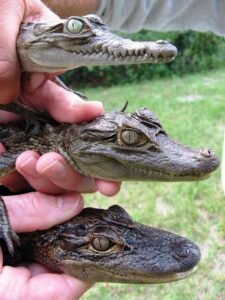
One of the easiest ways to identify an alligator skull is by examining the snout.
Alligator
- Wide, rounded U-shaped snout
- Broad across the front
- Designed for crushing prey
Caiman
- Generally more triangular or moderately V-shaped snout
- Narrower than an alligator but often broader than many crocodile species
- Some species exhibit pronounced bony ridges between the eyes
- Adapted for a varied diet that can include fish, invertebrates, and small vertebrates
Crocodile
- Narrower V-shaped snout
- More pointed appearance
- Adapted for catching fast-moving prey
When comparing skulls side by side, alligators typically have the broadest and most rounded snouts. Caiman skulls often appear intermediate between alligators and crocodiles, while crocodile skulls generally have the narrowest and most pointed snouts.
If the skull appears broad and rounded when viewed from above, it is likely an alligator.
Teeth and Jaw Structure
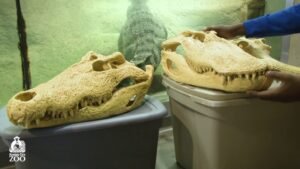
Adult alligators typically possess between 74 and 80 teeth at any given time. These teeth are continuously replaced throughout the animal’s life.
A key identification feature is how the teeth fit together when the jaws are closed. In alligators, the upper jaw is wider than the lower jaw, causing most lower teeth to fit inside the upper jaw and remain hidden.
In crocodiles, several lower teeth remain visible even when the mouth is closed.
The large fourth tooth on each side of the lower jaw is especially useful for distinguishing crocodilians. On an alligator skull, this tooth fits into a socket in the upper jaw rather than remaining exposed.
Eye Socket and Skull Ridge Characteristics
Alligator skulls have large eye sockets positioned toward the top of the skull. These elevated eye positions allow living alligators to see above the water while keeping most of their body submerged.
Prominent ridges above the eyes are another identifying feature. These ridges provide structural support and contribute to the alligator’s recognizable appearance.
The skull also contains large temporal openings behind the eye sockets. These openings reduce skull weight while providing attachment points for powerful jaw muscles.
Identifying Juvenile vs. Adult Alligator Skulls
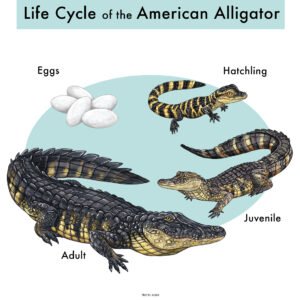
Size alone does not always determine the age of an alligator, but several clues can help.
Juvenile Skulls
- Smaller overall dimensions
- Less developed bone ridges
- Narrower snout proportions
- Smaller tooth sockets
Adult Skulls
- Heavier and denser bone structure
- More pronounced ridges
- Wider snout
- Larger jaw muscles attachment areas
As alligators mature, their skulls become more robust and capable of generating greater bite force.
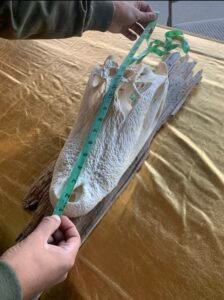
Measuring an Alligator Skull
Collectors often measure alligator skulls from the tip of the snout to the rear of the skull.
Common skull sizes include:
- 10–12 inches: Smaller specimens
- 13–15 inches: Medium-sized adults
- 16–18 inches: Large adults
- 19+ inches: Trophy-sized specimens
A well-cleaned European mount allows collectors to appreciate the intricate bone structure and natural anatomy of the skull.
Common Mistakes in Skull Identification
Beginners sometimes confuse alligator skulls with:
- Crocodile skulls
- Caiman skulls
- Large monitor lizard skulls
The broad U-shaped snout remains the most reliable visual indicator for identifying an alligator skull.
Additional confirmation can be obtained by examining tooth placement, jaw width, and overall skull proportions.
Why Collectors Value Alligator Skulls
Alligator skulls are highly sought after because they showcase the remarkable anatomy of one of North America’s most iconic predators. Each skull displays unique characteristics, including tooth wear patterns, bone texture, and natural variations developed over the animal’s lifetime.
Professionally prepared alligator skull European mounts preserve these details while creating a striking display piece for homes, offices, educational collections, and wildlife enthusiasts.
Conclusion
Identifying an alligator skull becomes straightforward once you understand its defining features. The broad U-shaped snout, powerful jaw structure, hidden lower teeth, and prominent eye ridges all help distinguish alligator skulls from other reptiles.
Whether you’re studying anatomy, building a collection, or purchasing a professionally prepared European mount, recognizing these characteristics will help you confidently identify an authentic alligator skull and appreciate the remarkable adaptations of this ancient predator.
At Southern Saurian, we specialize in professionally cleaned and prepared alligator skull European mounts that highlight the natural beauty and anatomy of these incredible reptiles.
[…] How To Identify Alligator Skulls […]
[…] How To Identify Alligator Skulls […]
[…] How To Identify Alligator Skulls […]
[…] How To Identify Alligator Skulls […]
[…] How To Identify Alligator Skulls […]
[…] How To Identify Alligator Skulls […]